materials1 min read
Tanning Tales: What Makes Bhinmal Leather Age So Well
Draft: vegetable tanning, desert sun and the leather that grows kinder with every year on your feet.
00
For eight centuries, zardozi has turned the juti into a canvas of gold. Meet the karigars who keep the flame of this royal embroidery alive in Bhinmal.
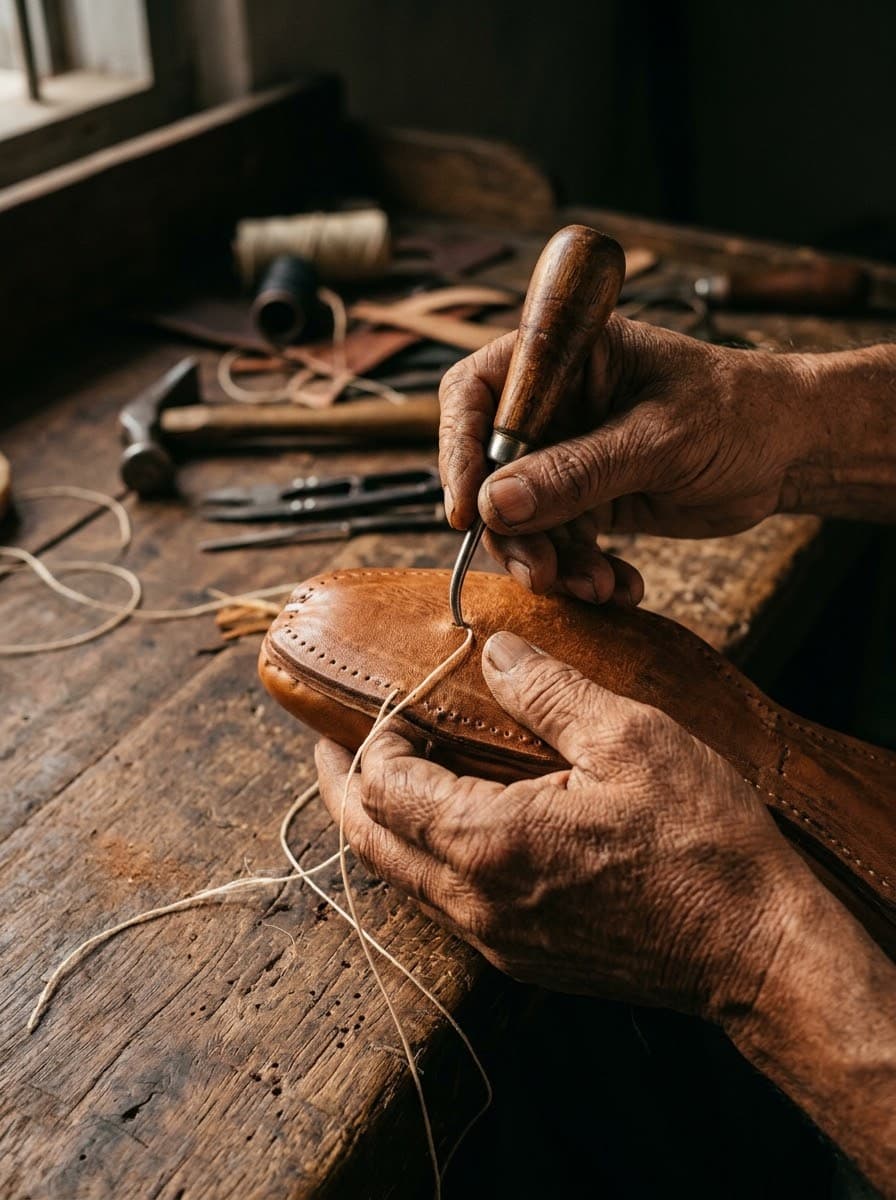
Zardozi, from the Persian "zar" (gold) and "dozi" (embroidery), arrived in India with the Mughals and found a second home in Rajasthan. What began on court robes now lives on the curled toes of the finest juti in Marwar Bhinmal, in Jalore district.
Traditionally, zardozi used real gold and silver threads. Today our karigars work with fine gilt wire, but the discipline is unchanged: every coil is laid by hand, every sequin pinned with intent, and a single royal velvet pair can demand eight hours of embroidery before the first stitch of the sole is even planned.
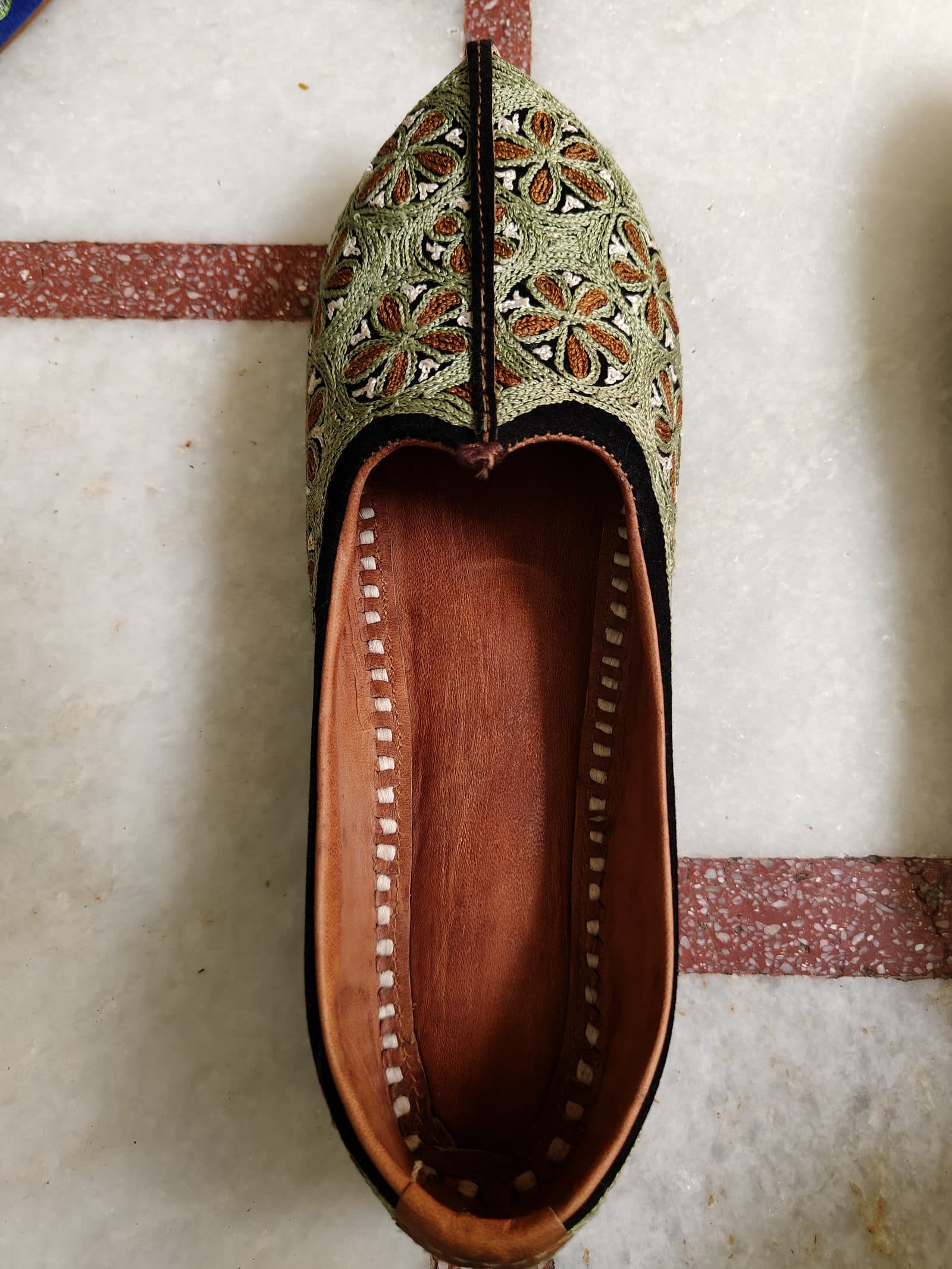
The needle does not decorate the cloth. It listens to the cloth, then it speaks.
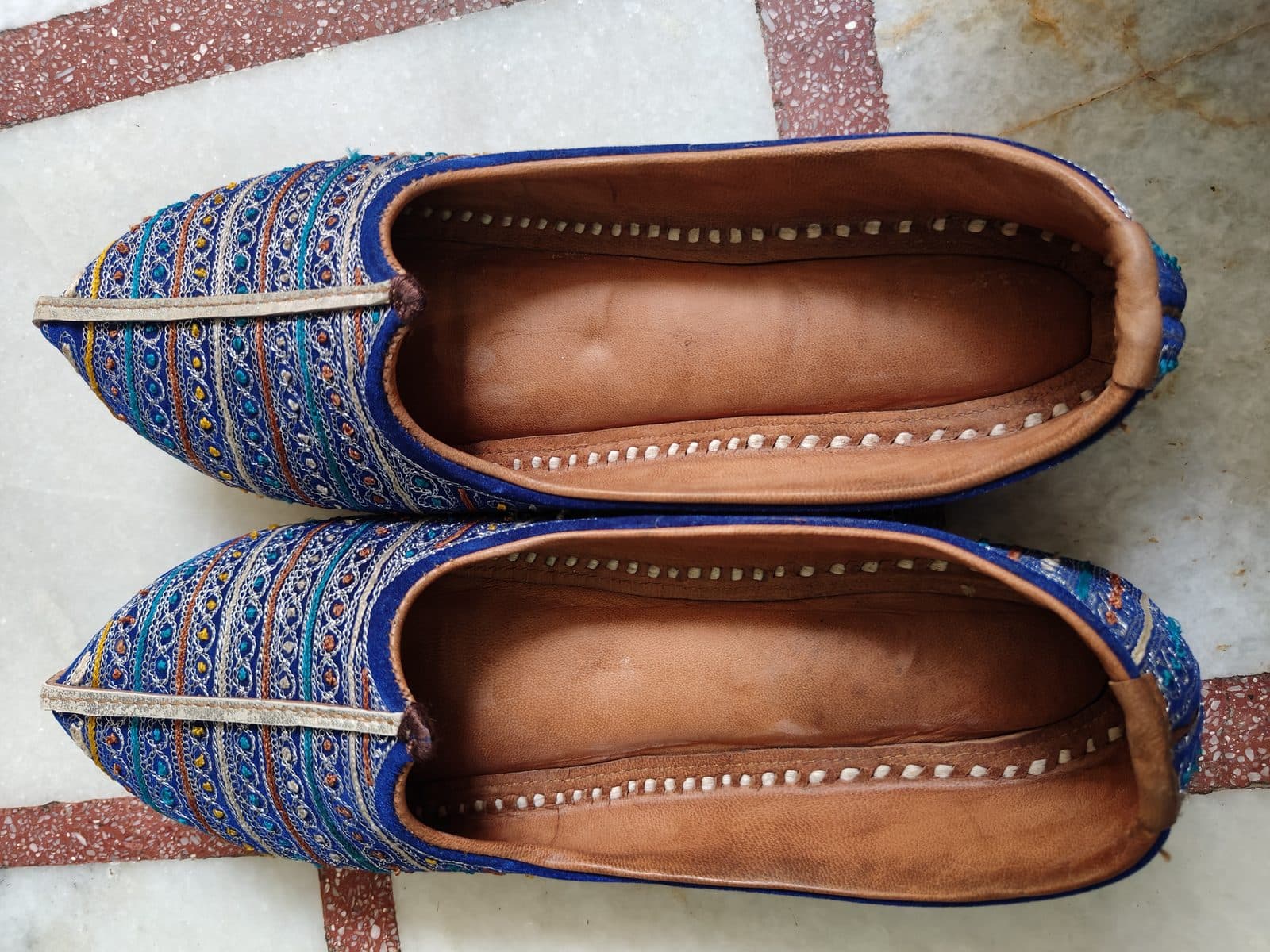
When you wear zardozi, you carry a piece of a karigar's week on your feet. That is the quiet luxury of a handcrafted juti: it does not shout, it glimmers.
1247 views
Continuations
Draft: vegetable tanning, desert sun and the leather that grows kinder with every year on your feet.
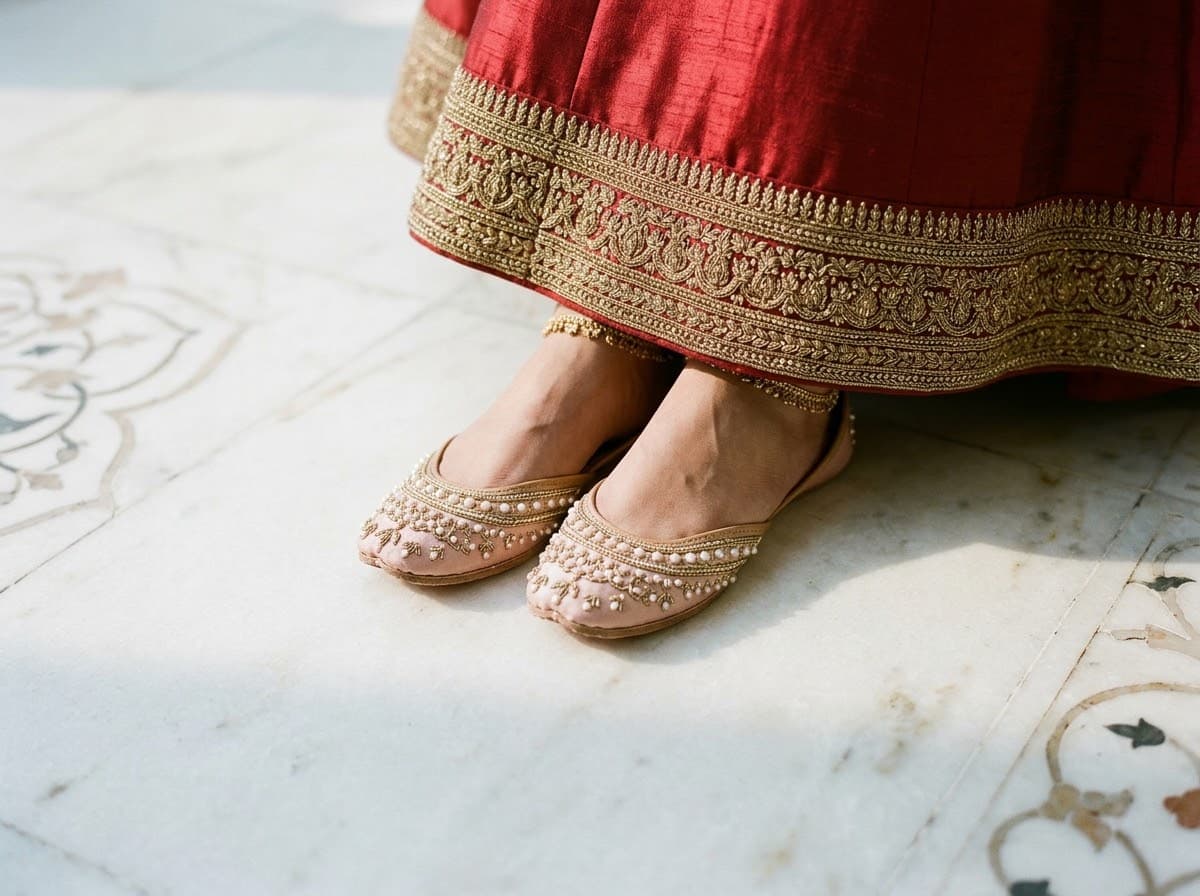
Blush silk, gota-patti and a sole that moulds to the foot: how to choose the juti that will carry you through the longest, happiest walk of your life.
The Living Heritage Letters
Field recordings, archival releases and invitations to open-bench days in Rajasthan.
Welcome to the Guild Registry.
Comments